


Zapier is the most popular business automation platform. It’s main goal is to bridge gaps between applications by letting you push data from any of it’s 5000 apps to another one. Once you setup such a Zap, it is executed seamlessly behind the scenes.
However there are certain scenarios where you may not want your data to stay “behind” the scenes. For example, people building personal dashboards might want to see their data aggregated on their screen. Clearbox reports that monitoring all aspects of a business, from one place, is a core aim of an efficient digital workplace.
Indeed, Zapier offers a few ways in which users can view data: for example, Email or RSS can be used as a way of forwarding incoming Triggers to a users inbox or preferred RSS reader.
There is even one Zapier app named Adaptive Card Maker that lets you push Zaps to a personal dashboard. In this article, we’ll see how that works.
Create a free dashboard

To start, get yourself over to the Digital Assistant registration page and register a free account. Once that’s done you’ll be greeted by your own (and empty) Board where the Adaptive Cards will later go.

Start your Zap
Now let’s head over to Zapier’s list of some 5,000 apps. Start a new Zap from their website by searching for your source app in the first dropdown, and then selecting Adaptive Card Maker by adenin in the second dropdown.
Configure steps
Then start to connect with your source app following the steps required by Zapier’s Zap Editor. For the Adaptive Card Maker event you will have selected Generate New Card Entry (there’s just one option) and this is how you need to configure it:
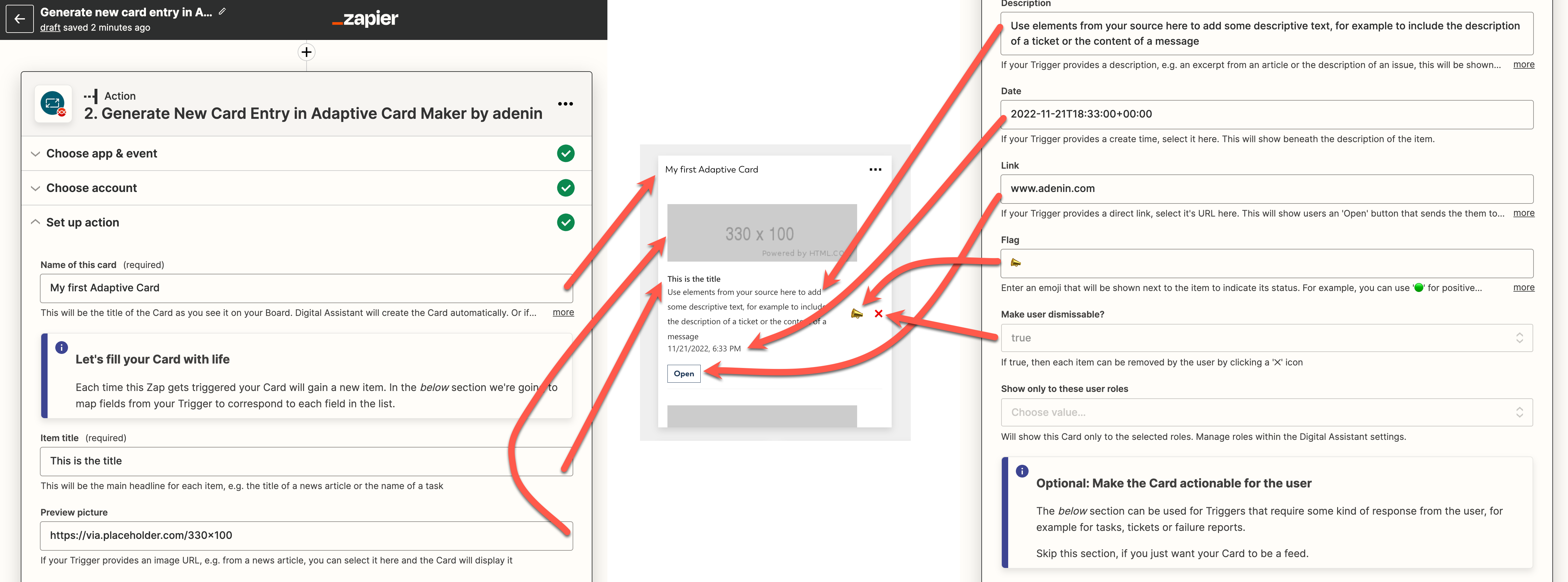
Basically each line in the Zap corresponds to a line of the Adaptive Card you will get on your Board. Once you send the test event off, the Card will automatically appear on your Digital Assistant Board at https://app.adenin.com/.
You can repeat sending of test events, or generate real events in your source app and refine the Zap event until you’re happy with the result.
Editing the Zapier Adaptive Card
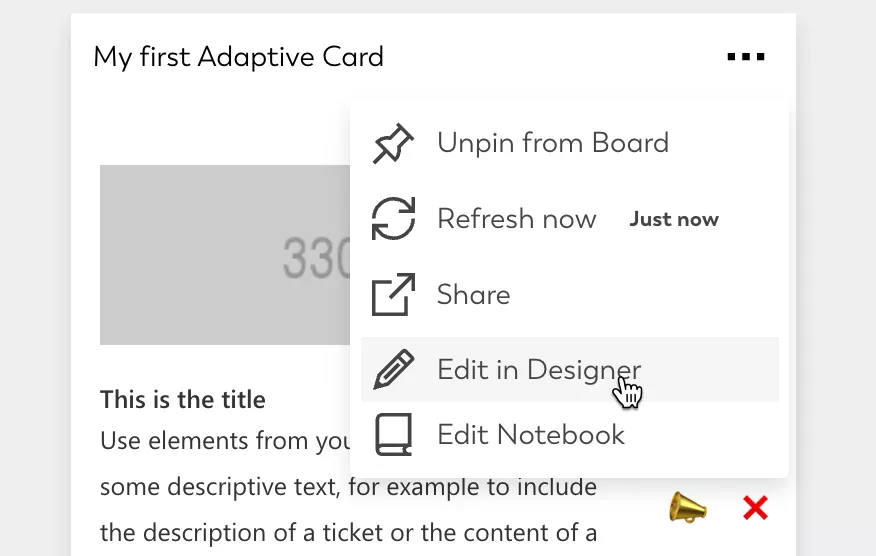
If you want to further change the layout of your Card, you can also open it in the Adaptive Card designer. For that, just click the ··· button and then select Edit in Designer.
For example, you could move the image around into a side-by-side view by using a ColumnSet element.
Related: Tutorial how to make an Adaptive Card

The last step would be to share your Zapier Adaptive Card with your team, for example in SharePoint or the Microsoft Viva dashboard. For that, just hit the Share button in the Adaptive Card Designer and then select your desired intranet platform. The platform will then direct you to the various AppSource packages for each product.
Related: Find out which channels support Zapier Adaptive Cards
For example in Viva Connections dashboard, your Zapier Adaptive Card would look like this:

~~
Have you made an Adaptive Card with Zapier before? What are your most recommended Zapier apps you like to share with your team, or do you prefer them just for your own use? Let us know in the comments below.


