March ’21 update: New apps and Adaptive Card designer updates

In this months’ updates we’ve made a number of great UI improvements to the Adaptive Card designer and added 2 apps to the App Directory. Check it out!

New app: Salesforce

We’ve refreshed our Salesforce app, and it’s now available to users of all plans (as opposed to being a Plus plan app previously). The Salesforce app for Digital Assistant allows your Sales team to get all of their leads, tasks or tickets in one convenient view in their Assistant – even offering charts as a way to visualize their data and build a personalized dashboard.

Ready-to-use Cards for Digital Assistant's Salesforce integration, showing open tickets, new leads and an inline form to create new tasks
Coming with pre-built Cards the Salesforce app is instantly ready to support sales and support teams using Salesforce

The app now features new chatbot utterances that let you create new tickets, tasks or events straight from your chatbot – without requiring the user to go to Salesforce at all. Users can interact with their chatbot in Microsoft Teams, adding functionality to Teams that even Salesforce’s own Teams app doesn’t provide.
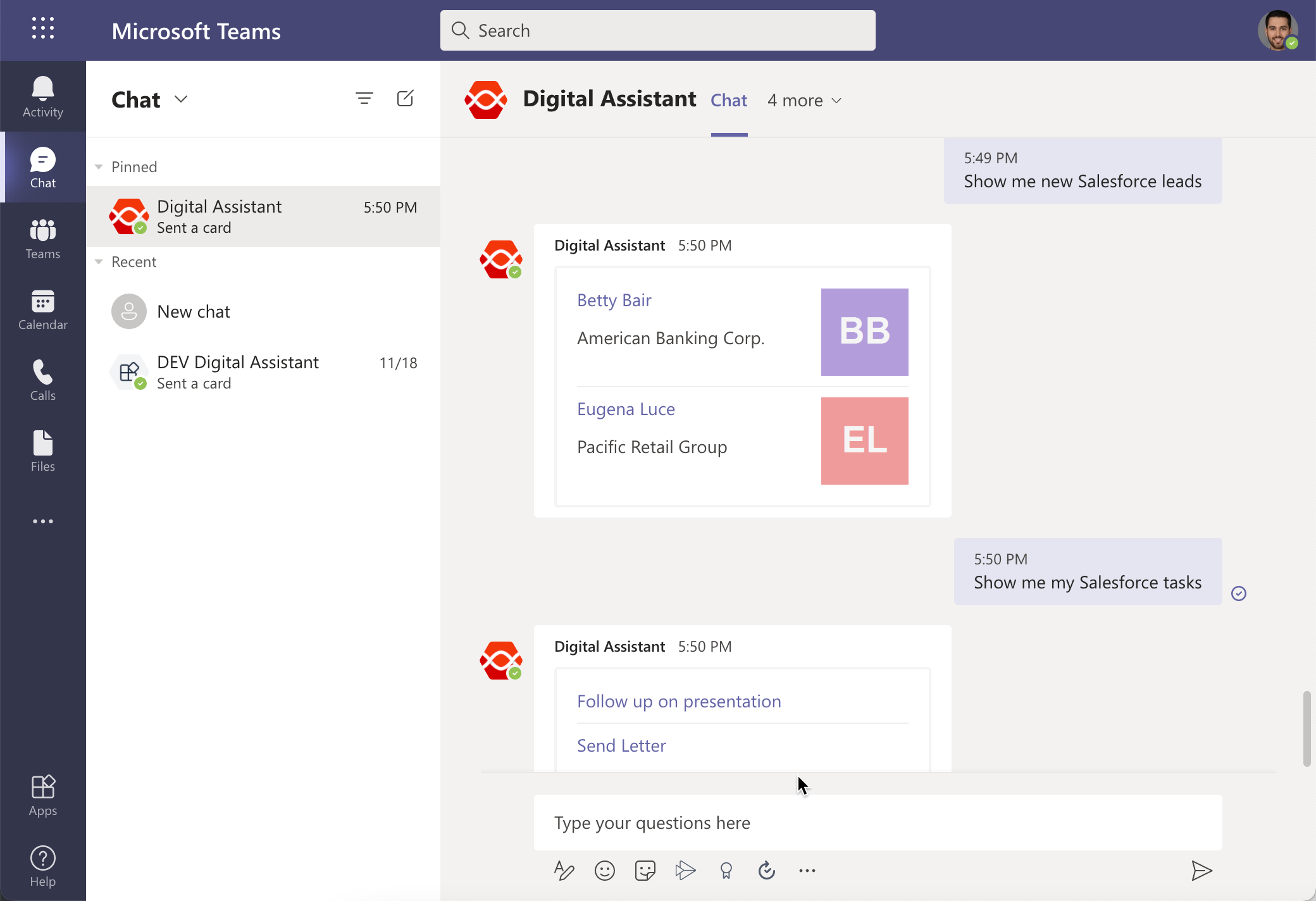
Digital Assistant's Microsoft Teams app displaying information from Salesforce
Salesforce Teams app chatbot and Adaptive Cards

Get the new Salesforce app for Digital Assistant right now, by heading over to the App Directory. To add Salesforce to Microsoft Teams, look at the Teams channel page.

New app: Asana

The popular project management tool is now available in the App Directory. With just two clicks you can connect to your Asana data securely via OAuth 2.
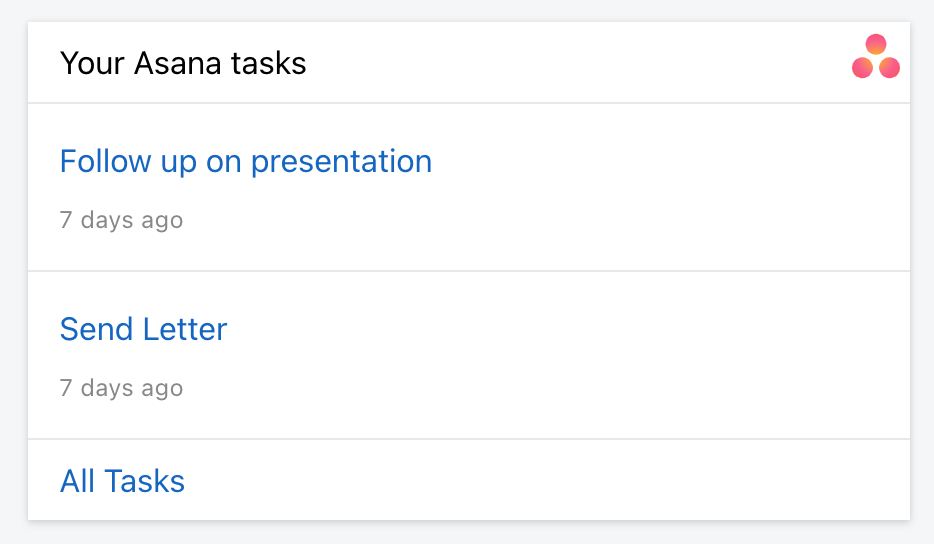
Digital Assistant Card using an Asana connector to display a list of assigned tasks

Once that connection has been made you can create Adaptive Cards with the Designer and dynamically insert your Asana data into your layout. Either pick an Adaptive Card sample list to start your design with, or create your own cool layouts.

Add Asana to your Digital Assistant by visiting the App Directory

Updated: Adaptive Card Designer

Following user feedback we’ve rolled a range of UI improvements to the Adaptive Card Designer that should make it easier to get from Connector to finished Card.

1. New configurations

Digital Assistant's Adaptive Cards Designer toolbar

The adenin version of Adaptive Cards adds AI training, live data and deployment options to the standard version from Microsoft. To manage all of this ancillary data, we have created four separate modals that let the designer manage them with ease: Add Utterances, Pick a Connector, Link Automation and Manage Card Settings.
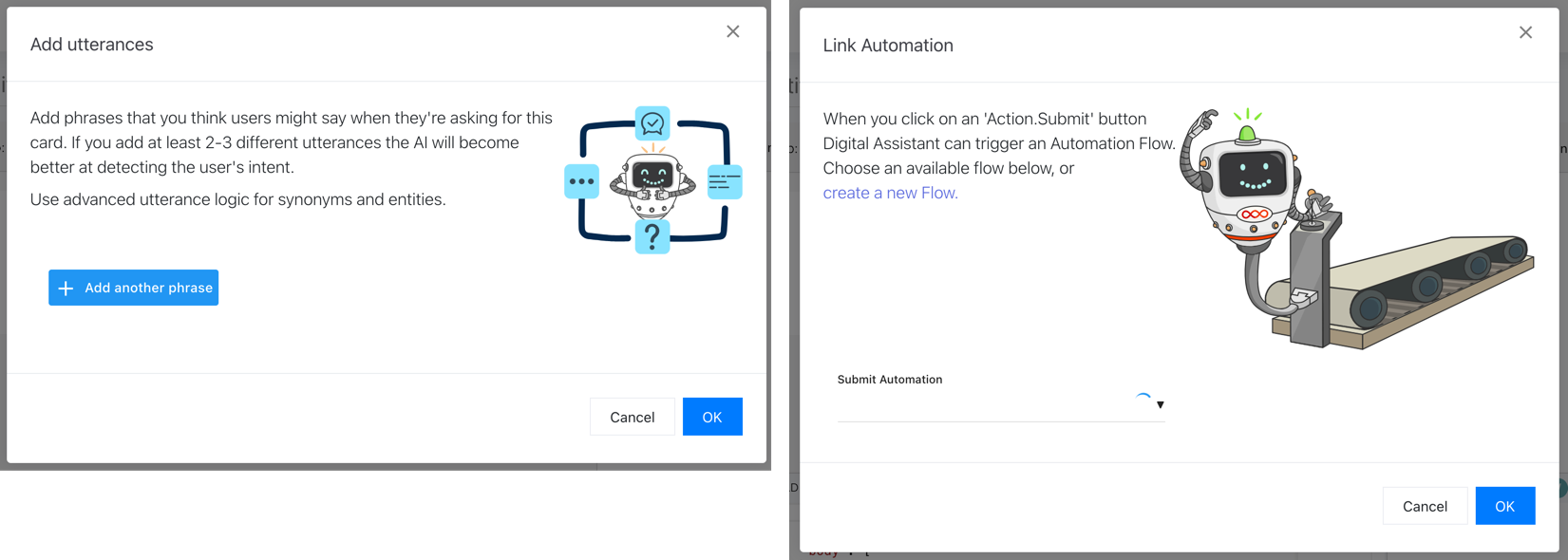
Two modals from Digital Assistant's Adaptive Card Designer, to configure utterances and create automations

2. Improved live data display

Full view of Digital Assistant's Adaptive Cards Designer. An arrow highlights the new live data preview section

The Sample Data Editor area can now project live data from a selected Connector instead of just a static sample of data. This allows to you to dynamically place live strings into your Card layout through the built-in Databinding function.

3. Improved save behavior

An untitled Card in the Adaptive Cards Designer

New Cards will now no longer save if the user is not making any entries or manually hits the Save button.

A button with a dropdown menu, with options to create different types of Cards in Digital Assistant

To use the new features in the Adaptive Cards designer, just head over to the Cards menu in your Digital Assistant and select Add Adaptive Card from the Add new dropdown.

Improved: Customizable scopes for Connectors

Connectors from the App Directory that use OAuth2 come pre-configured with the scopes necessary to access the most common endpoints for each Connector. These scopes need to be accepted by the user and determine how far reaching the permissions are that the Digital Assistant receives.
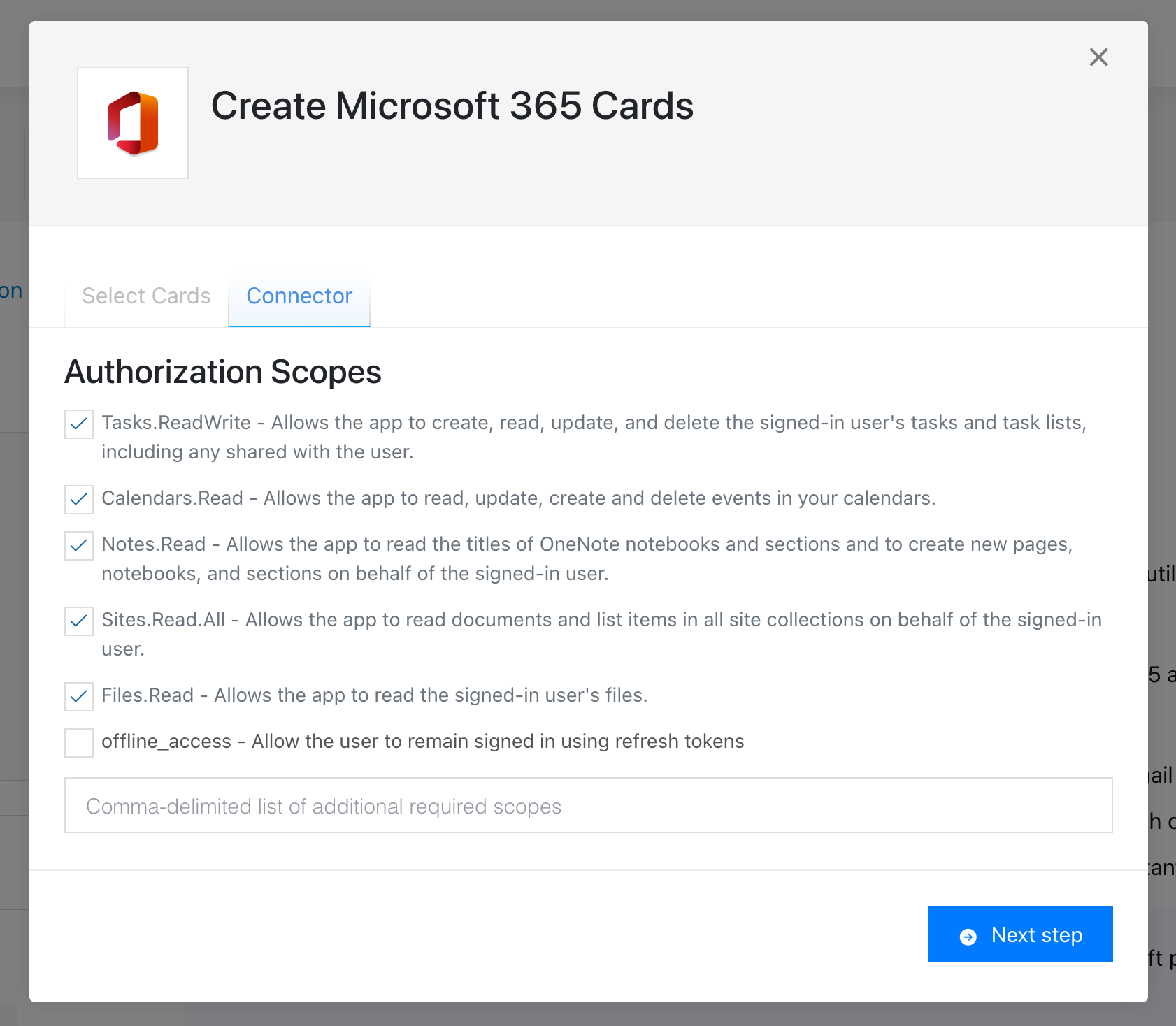
A modal for the Microsoft 365 connector, showing a list of available API scopes

In order to keep this “footprint” of permissions as limited as possible, administrators can now unselect scopes they don’t need for their use case, during the initial setup process.

It’s also possible to add in custom scopes if you wish to use an endpoint that may require an uncommon scope that’s not already listed.

Related Posts
Read More

Feature update: Chrome extension for Digital Assistant

Today we have released a new version of our Chrome extension! With this new version you get: Existing users don’t have to do anything and will see the update roll out shortly. To get the Chrome extension, head over to the App Directory.
Read More

Introducing the Microsoft Lists web part for SharePoint

Simplify your team’s workflows with the Microsoft Lists web part, now available for both SharePoint and Viva Connections dashboards! This integration lets you bring your Lists and document libraries into SharePoint pages and Viva Connections, offering an intuitive way to organize, share, and manage information. From project tracking to issue logging, Lists helps your team stay on top of tasks—all from a single interface. Ready to boost productivity? Download the web part now from Microsoft App Source.
Read More

Ka-ching! Shopify orders can now be managed with ease

Exciting news for all online merchants. We’re thrilled to introduce the latest addition to our integration family: Shopify. This powerful integration transforms the way you manage your e-commerce store directly from your digital workplace platform. With the Shopify integration for adenin, you can seamlessly connect your online store to your digital workplace, making it easier than ever to monitor sales, fulfill orders, and interact with customers. Imagine having real-time sales notifications, order summaries, and customer inquiries at your fingertips, all without leaving your dashboard. This integration is designed to streamline your e-commerce operations, enabling you to provide exceptional customer service…
Read More

New Chatbot channel available: Microsoft Teams

Microsoft Teams is rapidly picking up market share in the enterprise chat market, with over 200,000 organizations worldwide utilising teams as their chat collaboration tool of choice. But if you’re already using Teams, or considering transitioning towards it, you might be wondering whether you’re creating a holistic digital workplace environment for your workforce with Teams, or whether you’re just adding another app to the pile. How to add a Digital Workplace to Microsoft Teams One way to ensure that users find it fruitful to return to a new workplace application like Microsoft Teams is to ensure the app is adding value to their workday. Microsoft Teams makes this easy with the addition of ‘bots’…