


In today’s dynamic business environment, front-line workers (FLWs) — such as retail associates, warehouse workers, and service staff — are often the backbone of customer interactions and operational efficiency. Yet, they are frequently underserved by traditional digital tools and intranets, which are often designed with office-based roles in mind. Enhancing the experience of these workers through a modern, role-based intranet is not just a matter of convenience; it’s a strategic priority that can drive productivity, engagement, and satisfaction across your organization.

Why improving front-line worker experience matters
Front-line workers play a crucial role in representing the brand and ensuring smooth day-to-day operations. However, they often face unique challenges that office workers do not. They need quick and easy access to the right information, tools, and processes directly from the intranet — often while on the move. The current “one-size-fits-all” intranet solutions often fail to address these specific needs, leading to frustration, inefficiency, and disengagement.
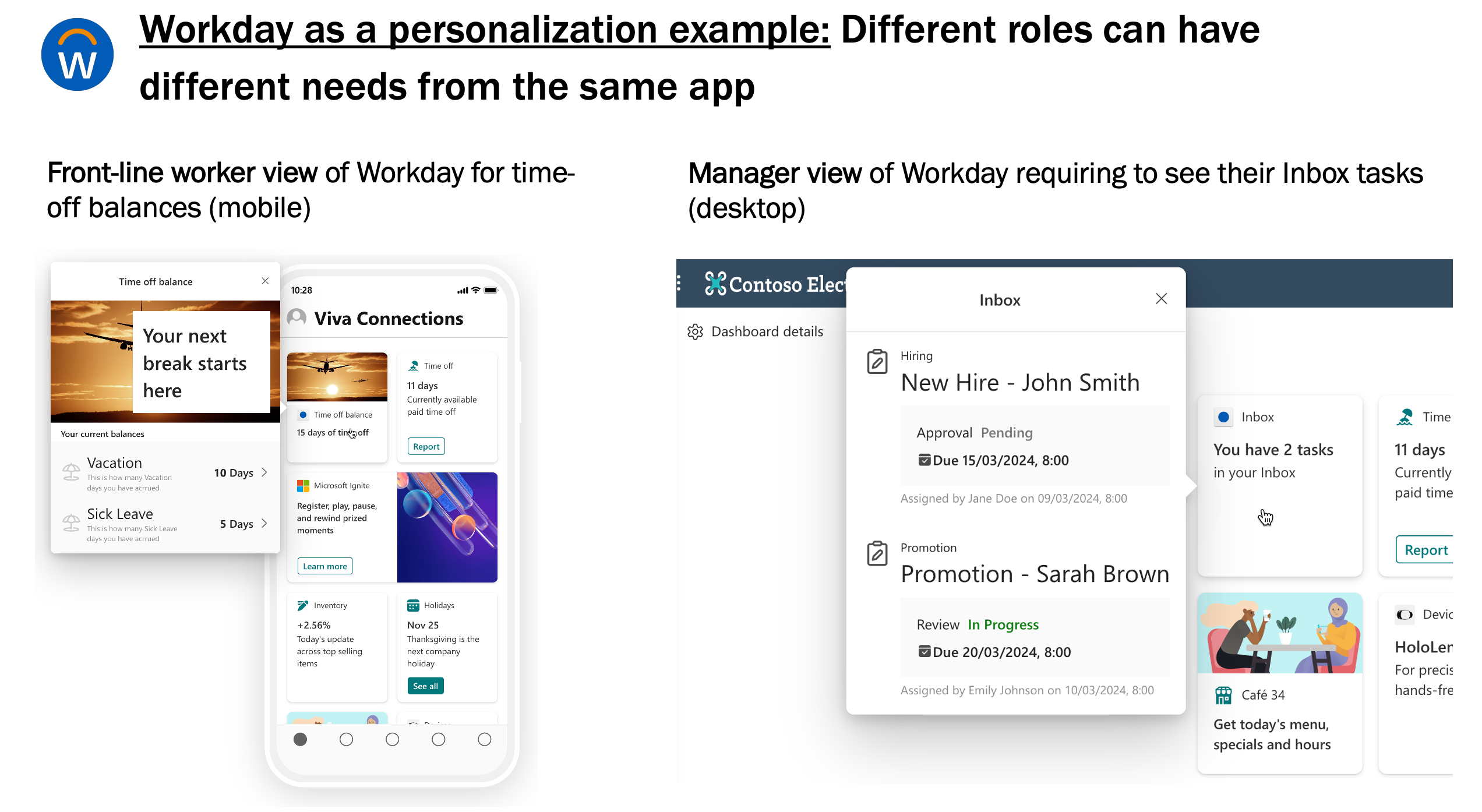
Consider a retail associate who requires real-time access to inventory levels or customer service tools. A traditional intranet might bury this information several clicks deep, or it may not even be accessible via mobile devices. By contrast, a store manager needs to view sales reports and manage team schedules, tasks that require more comprehensive data and functionality. Providing role-based intranet experiences tailored to these diverse needs can make a significant difference in daily productivity and job satisfaction.

How Viva Connections integrations offered by adenin can help
Adenin’s platform enables organizations to transform their intranets into dynamic, role-based experiences that serve the specific needs of every front-line worker. By leveraging Microsoft Viva Connections, adenin provides a suite of integrations that connect your front-line workers with the tools and information they need most, directly within their everyday workflows.
Key benefits of using adenin with Viva Connections:
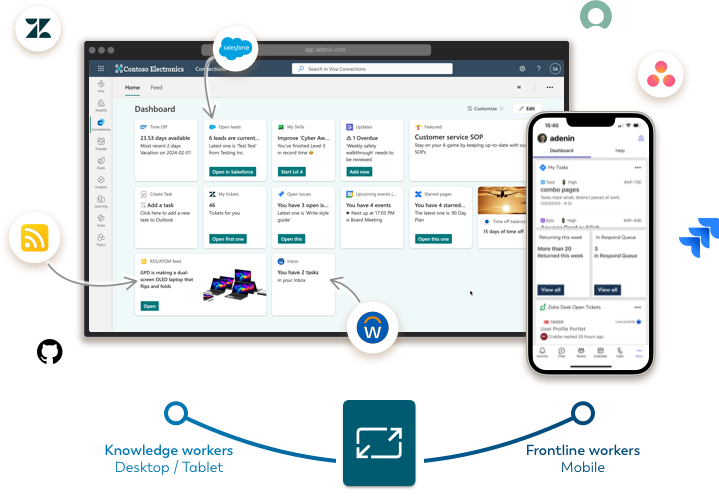
- Real-Time, Role-Based Integrations: Adenin specializes in integrating third-party data into Microsoft Viva Connections through Adaptive Cards, which can be customized to deliver real-time, relevant information directly to front-line workers. This means FLWs only see the data that matters to them — whether it’s a list of their current tasks, recent incidents to report, or an overview of today’s sales targets.

- Tailored, Accessible Experience Across Devices: Adenin’s Adaptive Cards work seamlessly across desktop, tablet, and mobile devices, ensuring that front-line workers have access to the tools and data they need, wherever they are. From incident management apps for manufacturing operators over product information apps for retail associates to fleet information for passenger transport workers – adenin helps make the most critical apps easily accessible in the flow of work.
- Custom Solutions for Specific Roles: Adenin helps create bespoke solutions that address the specific challenges of front-line roles. For example, manufacturing workers might have access to health and safety guidelines, quality control apps, and real-time problem-solving tools directly from their Viva dashboards. Retail workers could utilize scheduling tools, loyalty program trackers, and customer service apps that are all embedded into the same intranet environment. Passenger transport workers on the other hand might get a status of the service on the network, or easy ways to report maintenance issues to the depot.
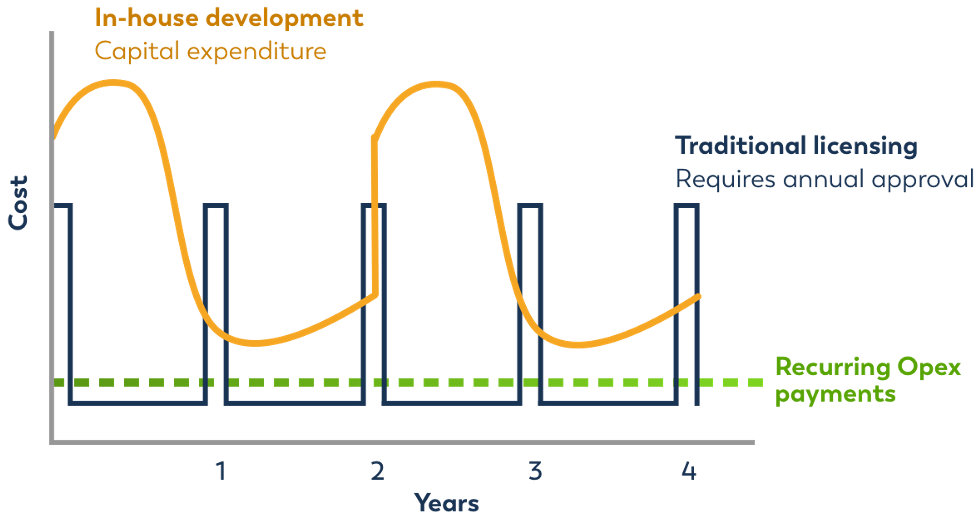
- Cost-Effective and Flexible: With adenin’s Opex-friendly subscription model, organizations can spread the costs of running and maintaining these integrations without large upfront investments or the need for ongoing in-house development resources. This makes it easier to scale and adapt the intranet to meet the evolving needs of your front-line workforce.
- Accelerated Time to Value: Adenin offers pre-built integrations and custom Adaptive Cards that can be quickly deployed, accelerating the time to market and return on investment (ROI) from your Microsoft Viva and Copilot investments. This ensures that your organization can see benefits from day one, without the complexities of lengthy development cycles.
Conclusion: Empowering FLW through tailored digital experiences
Enhancing the front-line worker experience is no longer optional; it’s a critical driver of business success. By providing your FLWs with a role-based, tailored intranet experience using adenin’s integrations with Microsoft Viva Connections, you empower them to be more productive, satisfied, and engaged. Whether it’s real-time data, customized workflows, or seamless mobile access, adenin helps your organization leverage existing Microsoft investments to create a more effective and inclusive digital workplace for everyone.
Ready to transform your intranet for front-line success? Discover how adenin can help you maximize your Viva Connections investment today by requesting a free no-obligation consultation with one of our consultants.


